

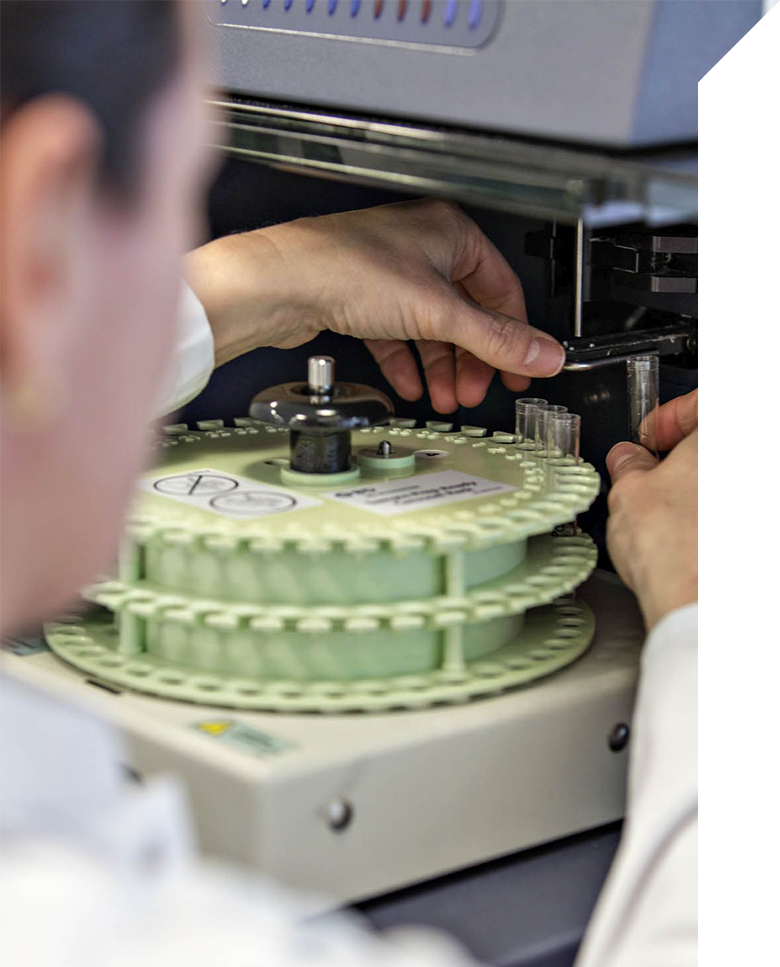

The scope of the Hemosum platform is to determine the hemostatic balance in patients who are (at risk for) bleeding in an acute setting. Focus is on acute clinical situations with a need for fast assessment of the hemostatic balance to define a hemostatic cause or to monitor treatment.
We hypothesize that combining global hemostatic tests with routine hemostasis tests will improve (personalized) bleeding risk prediction and treatment for patients with a hereditary or acquired hemostatic disorder. Therefore we present a scope from the laboratory perspective which will be combined with the scope from the clinical perspective:
Scope from the laboratory perspective
Existing and innovative, new laboratory tests will be included which have the potency to give fast, reliable and relevant information on the hemostatic balance of the bleeding patient. We aim at applying one or more diagnostic tests combined with a clinical score, which can be used in an algorithm in acute settings. The test results have to indicate 1) whether hemostasis is in balance, 2) which hemostatic pathway is aberrant (coagulation, platelets, VWF, fibrinolysis). Ideally, we also want to include the potential of diagnostic tests for fast therapy monitoring.
The Hemosum platform will focus on three different global hemostatic assays with the potential to give fast and relevant results:
- Viscoelastic testing
- Thrombin generation
- Microfluidics

1. Viscoelastic testing

2. Thrombin generation

3. Microfluidics
Scope from the clinical perspective
The Hemosum platform has special interest for three clinical settings in which (the risk) for acute bleeding plays an important role:
1. Acute bleeding in patients with congenital bleeding disorders and determination of the need for pro-hemostatic drugs. We focus on von Willebrand disease, trombopathies and Hemophilia A and B as these are most prevalent.
2. Excessive bleeding in post-partum hemorrhage and the determination of the need for pro-hemostatic drugs or transfusion products.
3. Acute major bleeding or ischemic stroke in patients using direct oral anticoagulants (DOACs) and the need for antidotes or pro-hemostatic drugs without risking a recurrent thrombosis
4. Acute and excessive bleeding in trauma or surgery and the determination of the need for pro-hemostatic drugs or transfusion products.

1. Hereditary bleeding

2. Post partum hemorrhage

3. Antithrombotic medication

4. Surgery and trauma